Purity and identity are established at the moment of testing. What happens after that — how a compound is received, inspected, stored, and reconstituted — determines whether the result on the Certificate of Analysis still describes what's in the vial. This is the laboratory protocol we recommend from receipt through working stock.
Receiving and inspection
Materials arrive via temperature-controlled shipping; what matters more is what happens once the package is opened. Inspect every vial before it enters inventory: confirm the label is legible and undamaged, check that the seal is intact, and examine the lyophilized cake for discoloration or visible moisture. A vial that fails inspection should be quarantined and checked against its Certificate of Analysis before anything else happens to it.
Documentation and traceability
Every compound ships with a batch-specific Certificate of Analysis and its own reference number. Good laboratory practice treats that documentation as part of the material, not paperwork filed alongside it: log the reference number against the vial in the laboratory's own inventory system on receipt, and organize stock by compound and batch rather than by delivery date, so any vial's documentation is never more than one lookup away. A record of what was received, in what condition, and how it has been handled since should be as retrievable as the compound itself.
Storage and contamination control
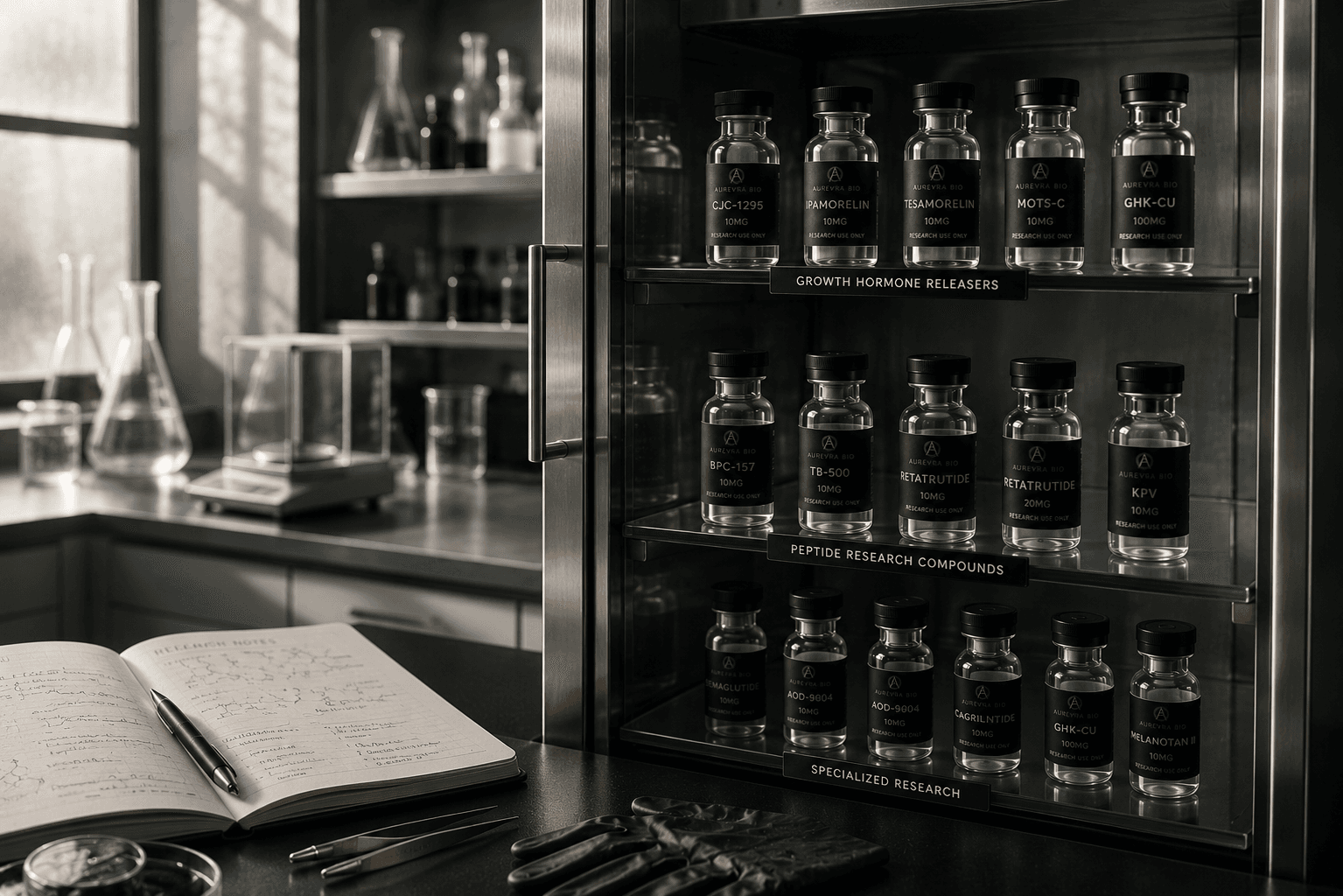
Lyophilized peptide is stable at −20 °C for the expiration window listed on its COA. Store it in a dedicated, temperature-monitored freezer, away from repeated door-opening and temperature cycling. Aseptic technique applies from first contact: sterile, single-use needles and syringes for withdrawal, alcohol on the septum before each puncture, and unused material is never returned to a stock vial. Contamination introduced at this stage isn't something the COA can catch — it documents the compound before handling, not after.
Reconstitution and working stock
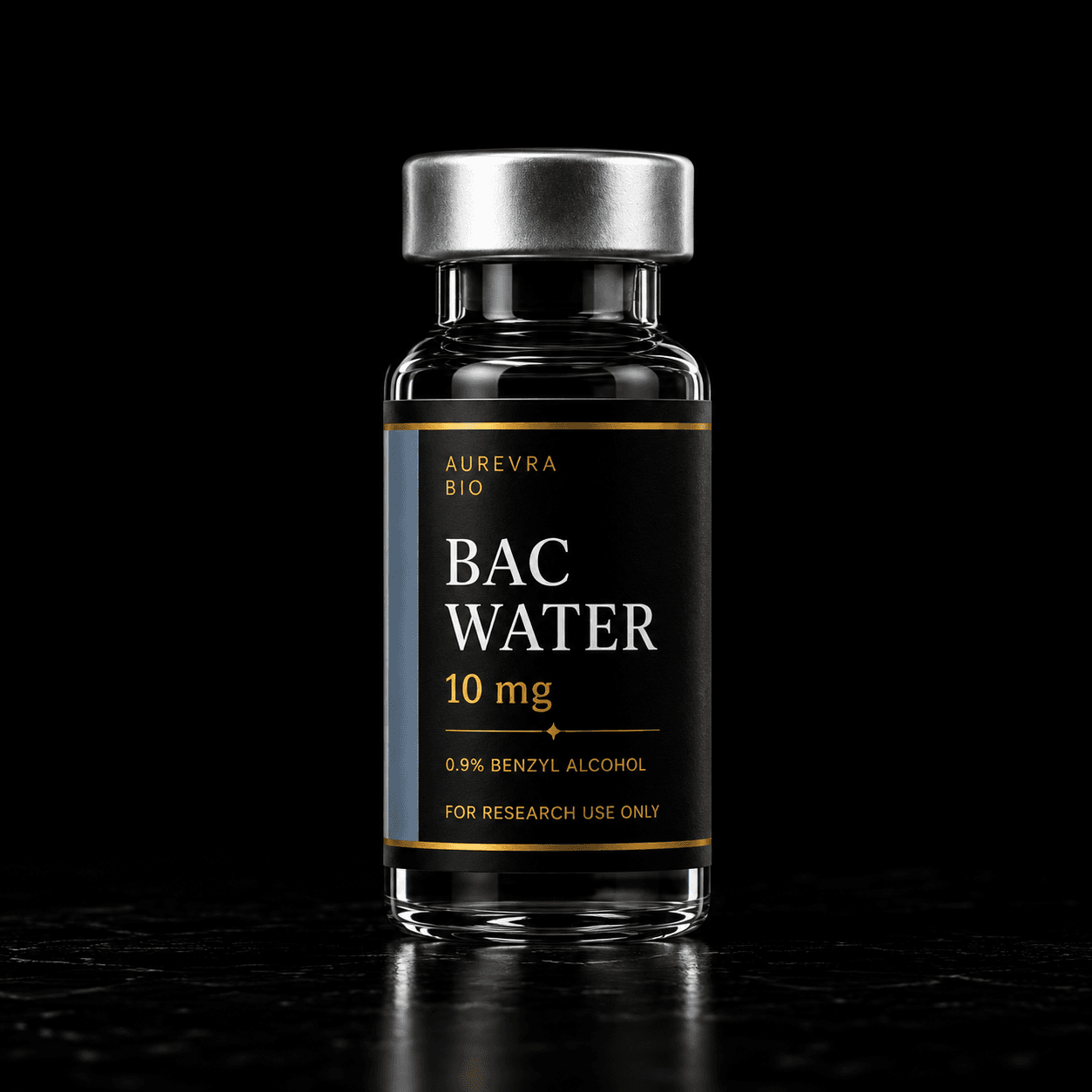
Reconstitute with bacteriostatic water (0.9% benzyl alcohol), maintaining aseptic technique throughout. Working stock held at 2–8 °C is typically stable for up to 28 days — label it with the reconstitution date, tracked separately from the original vial's batch number, so its own clock is never ambiguous. Avoid repeated freeze/thaw cycles; they degrade peptide structure independent of any contamination risk.
None of this replaces the batch-specific data on a Certificate of Analysis — it protects it. For research use only. The protocol above describes laboratory handling of research compounds; it does not constitute guidance for human or veterinary use.